nate Are You Picking Your Nose and Eating Your Boogers Again Stop Its Making You Stupid
Introduction
Coronaviridae is a family of viruses with a positive-sense RNA that possess an outer viral coat. When looked at with the help of an electron microscope, in that location appears to exist a unique corona around it. This family unit of viruses mainly cause respiratory diseases in humans, in the forms of common cold or pneumonia besides as respiratory infections. These viruses tin infect animals as well (ane, two). Up until the yr 2003, coronavirus (CoV) had attracted express interest from researchers. However, after the SARS (astringent acute respiratory syndrome) outbreak caused by the SARS-CoV, the coronavirus was looked at with renewed interest (3, 4). This too happened to exist the first epidemic of the 21st century originating in the Guangdong province of Red china. Almost x years subsequently, there was a MERS (Middle East respiratory syndrome) outbreak in 2012, which was caused by the MERS-CoV (5, six). Both SARS and MERS accept a zoonotic origin and originated from bats. A unique feature of these viruses is the power to mutate rapidly and arrange to a new host. The zoonotic origin of these viruses allows them to jump from host to host. Coronaviruses are known to use the angiotensin-converting enzyme-2 (ACE-2) receptor or the dipeptidyl peptidase 4 (DPP-four) poly peptide to proceeds entry into cells for replication (7–10).
In December 2019, almost seven years after the MERS 2012 outbreak, a novel Coronavirus (2019-nCoV) surfaced in Wuhan in the Hubei region of People's republic of china. The outbreak rapidly grew and spread to neighboring countries. However, rapid communication of information and the increasing scale of events led to quick quarantine and screening of travelers, thus containing the spread of the infection. The major part of the infection was restricted to China, and a second cluster was constitute on a cruise transport called the Diamond Princess docked in Nippon (11, 12).
Origin
The new virus was identified to be a novel Coronavirus and was thus initially named 2019-nCoV; later, it was renamed severe acute respiratory syndrome coronavirus ii (SARS-CoV-2) (13), and the disease it causes is now referred to equally Coronavirus Disease-2019 (COVID-nineteen) by the WHO. The virus was suspected to accept begun its spread in the Huanan seafood wholesale market in the Wuhan region. Information technology is possible that an animal that was carrying the virus was brought into or sold in the marketplace, causing the spread of the virus in the crowded marketplace. One of the offset claims made was in an article published in the Periodical of Medical Virology (14), which identified snakes every bit the possible host. A second possibility was that pangolins could exist the wild host of SARS-CoV-two (15), though the almost probable possibility is that the virus originated from bats (13, xvi–xix). Increasing evidence and experts are at present collectively terminal the virus had a natural origin in bats, as with previous such respiratory viruses (2, twenty–24).
Similarly, SARS and MERS were also suspected to originate from bats. In the instance of MERS, the dromedary camel is an intermediate host (5, 10). Bats take been known to harbor coronaviruses for quite some fourth dimension now. But as in the case of avian flu, SARS, MERS, and possibly even HIV, with increasing pick and ecological pressure due to homo activities, the virus made the jump from animal to man. Humans have been encroaching increasingly into forests, and this is truthful over much of China, equally in Africa. Combined with additional ecological pressure due to climate change, such zoonotic spillovers are now more than common than always. Information technology is likely that the next disease 10 volition likewise take such an origin (25). We have learned the importance of identification of the source organism due to the Ebola virus pandemic. Viruses are unstable organisms genetically, constantly mutating by genetic shift or drift. It is non possible to predict when a cross-species jump may occur and when a seemingly harmless variant form of the virus may turn into a deadly strain. Such an incident occurred in Reston, United states of america, with the Reston virus (26), an alarming reminder of this possibility. The identification of the original host helps us to comprise future spreads equally well equally to learn about the mechanism of manual of viruses. Until the virus is isolated from a wild animate being host, in this instance, mostly bats, the zoonotic origin will remain hypothetical, though likely. It should further be noted that the virus has acquired several mutations, every bit noted by a group in Red china, indicating that in that location are more than two strains of the virus, which may have had an impact on its pathogenicity. However, this claim remains unproven, and many experts have argued otherwise; information proving this are non yet available (27). A similar finding was reported from Italy and India independently, where they institute ii strains (28, 29). These findings need to exist farther cross-verified by similar analyses globally. If true, this finding could effectively explain why some nations are more than affected than others.
Transmission
When the spread of COVID-19 began (Figure i), the virus appeared to be independent within China and the prowl send "Diamond Princess," which formed the major clusters of the virus. Withal, as of April 2020, over 210 countries and territories are afflicted past the virus, with Europe, the USA, and Iran forming the new cluster of the virus. The U.s. (Figure 2) has the highest number of confirmed COVID-19 cases, whereas India and China, despite existence among the most population-dense countries in the world, accept managed to constrain the infection rate by the implementation of a complete lockdown with arrangements in place to manage the confirmed cases. Similarly, the U.k. has besides managed to maintain a depression curve of the graph by implementing similar measures, though it was not strictly enforced. Reports have indicated that the presence of dissimilar strains or strands of the virus may have had an upshot on the direction of the infection rate of the virus (27–29). The illness is spread by droplet transmission. As of Apr 2020, the total number of infected individuals stands at around iii million, with ~200,000 deaths and more than one one thousand thousand recoveries globally (thirty, 34). The virus thus has a fatality rate of around ii% and an R0 of 3 based on current data. Notwithstanding, a more recent study from the CDC, Atlanta, U.s., claims that the R0 could exist as high as 5.seven (35). It has also been observed from data bachelor from China and Bharat that individuals probable to be infected by the virus from both these countries belong to the historic period groups of xx–50 years (36, 37). In both of these countries, the working form mostly belongs to this age group, making exposure more likely. Germany and Singapore are keen examples of countries with a high number of cases simply low fatalities every bit compared to their firsthand neighbors. Singapore is one of the few countries that had developed a detailed programme of activity later the previous SARS outbreak to bargain with a like situation in the future, and this worked in their favor during this outbreak. Both countries took swift activeness afterward the outbreak began, with Singapore banning Chinese travelers and implementing screening and quarantine measures at a time when the WHO recommended none. They ordered the elderly and the vulnerable to strictly stay at home, and they ensured that lifesaving equipment and large-scale testing facilities were available immediately (38, 39). Germany took similar measures by ramping up testing capacity quite early and by ensuring that all individuals had equal opportunity to become tested. This meant that young, old, and at-adventure people all got tested, thus ensuring positive results early on during disease progression and that about cases were mild like in Singapore, thus maintaining a lower death percentage (xl). It allowed infected individuals to be identified and quarantined before they even had symptoms. Testing was carried out at multiple labs, reducing the load and providing massive scale, something which countries such as the Usa did quite late and India restricted to select government and private labs. The German government as well banned big gatherings and advocated social distancing to further reduce the spread, though unlike India and the USA, this was done quite late. South korea is some other example of how a nation has managed to comprise the spread and transmission of the infection. Republic of korea and the USA both reported their showtime COVID-19 cases on the same twenty-four hour period; withal, the U.s. administration downplayed the risks of the disease, dissimilar South Korean officials, who constantly informed their citizens about the developments of the affliction using the media and a centralized messaging system. They also employed the Trace, Test, and Treat protocol to identify and isolate patients fast, whereas the USA restricted this to patients with severe infection and only later broadened this benchmark, like many European countries as well as Republic of india. Different the USA, Republic of korea also has universal healthcare, ensuring free diagnostic testing.
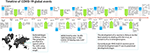
Figure 1. Timeline of COVID-19 progression (30–32).
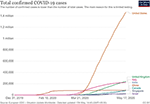
Effigy 2. Full confirmed COVID nineteen cases as of May 2020 (33).
The chief mode of transmission of 2019-nCoV is human to man. Every bit of at present, animal-to-human transfer has not however been confirmed. Asymptomatic carriers of the virus are at major risk of beingness superinfectors with this illness, as all those infected may not develop the disease (41). This is a concern that has been raised by nations globally, with the Indian government raising concerns on how to identify and comprise asymptomatic carriers, who could business relationship for 80% of those infected (42). Since electric current resources are directed towards understanding the hospitalized individuals showing symptoms, at that place is still a vast amount of information about asymptomatic individuals that has nonetheless to be studied. For instance, some questions that need to exist answered include: Do asymptomatic individuals develop the disease at any point in fourth dimension at all? Practice they eventually develop antibodies? How long do they shed the virus for? Can any tissue of these individuals store the virus in a dormant state? Asymptomatic transmission is a gray area that encompasses major unknowns in COVID-xix.
The main route of human-to-human transmission is by droplets, which are generated during coughing, talking, or sneezing and are then inhaled past a salubrious individual. They can too exist indirectly transmitted to a person when they land on surfaces that are touched by a salubrious individual who may and then bear on their olfactory organ, oral cavity, or eyes, assuasive the virus entry into the body. Fomites are also a mutual issue in such diseases (43).
Aerosol-based transmission of the virus has not nonetheless been confirmed (43). Stool-based transmission via the fecal-oral route may likewise be possible since the SARS-CoV-ii has been institute in patient carrion (44, 45). Some patients with COVID-19 tend to develop diarrhea, which can become a major road of transmission if proper sanitation and personal hygiene needs are non met. There is no prove currently available to suggest intrauterine vertical transmission of the disease in significant women (46).
More investigation is necessary of whether climate has played whatsoever function in the containment of the infection in countries such as India, Singapore, Mainland china, and State of israel, as these are significantly warmer countries as compared with the UK, the United states, and Canada (Figure two). Ideally, a warm climate should prevent the virus from surviving for longer periods of fourth dimension on surfaces, reducing transmissibility.
Pathophysiology
On gaining entry via whatsoever of the mucus membranes, the single-stranded RNA-based virus enters the host cell using blazon 2 transmembrane serine protease (TMPRSS2) and ACE2 receptor poly peptide, leading to fusion and endocytosis with the host cell (47–49). The uncoated RNA is then translated, and viral proteins are synthesized. With the assist of RNA-dependant RNA polymerase, new RNA is produced for the new virions. The jail cell then undergoes lysis, releasing a load of new virions into the patients' body. The resultant infection causes a massive release of pro-inflammatory cytokines that causes a cytokine storm.
Clinical Presentation
The clinical presentation of the disease resembles beta coronavirus infections. The virus has an incubation fourth dimension of 2–14 days, which is the reason why most patients suspected to have the illness or contact with an individual having the disease remain in quarantine for the said corporeality of fourth dimension. Infection with SARS-CoV-two causes severe pneumonia, intermittent fever, and cough (l, 51). Symptoms of rhinorrhoea, pharyngitis, and sneezing have been less commonly seen. Patients oftentimes develop acute respiratory distress syndrome within 2 days of hospital access, requiring ventilatory support. It has been observed that during this phase, the bloodshed tends to be high. Chest CT volition evidence indicators of pneumonia and ground-glass opacity, a feature that has helped to amend the preliminary diagnosis (51). The primary method of diagnosis for SARS-CoV-two is with the assist of PCR. For the PCR testing, the U.s.a. CDC recommends testing for the N factor, whereas the Chinese CDC recommends the use of ORF lab and N cistron of the viral genome for testing. Some likewise rely on the radiological findings for preliminary screening (52). Additionally, immunodiagnostic tests based on the presence of antibodies can likewise play a role in testing. While the WHO recommends the use of these tests for research use, many countries accept pre-emptively deployed the use of these tests in the promise of ramping upward the rate and speed of testing (52–54). Afterward, they noticed variations among the results, causing them to end the use of such kits; in that location was also fence among the experts about the sensitivity and specificity of the tests. For immunological tests, it is beneficial to test for antibodies confronting the virus produced past the trunk rather than to exam for the presence of the viral proteins, since the antibodies can be present in larger titers for a longer span of fourth dimension. However, the cross-reactivity of these tests with other coronavirus antibodies is something that needs verification. Biochemical parameters such as D-dimer, C-reactive poly peptide, and variations in neutrophil and lymphocyte counts are another parameters that tin can be used to make a preliminary diagnosis; however, these parameters vary in a number of diseases and thus cannot be relied upon conclusively (51). Patients with pre-existing diseases such as asthma or like lung disorder are at higher take a chance, requiring life back up, as are those with other diseases such equally diabetes, hypertension, or obesity. Those above the historic period of 60 have displayed the highest mortality rate in Mainland china, a finding that is mirrored in other nations as well (Figure 3) (55). If we cross-verify these findings with the population share that is above the age of lxx, we find that Italian republic, the Uk, Canada, and the USA accept ane of the highest elderly populations every bit compared to countries such as India and Prc (Figure 4), and this also reflects the example fatality rates appropriately (Figure 5) (33). This is a articulate indicator that aside from comorbidities, historic period is too an contained hazard factor for death in those infected by COVID-xix. Likewise, in the Usa, information technology was seen that the rates of African American deaths were college. This is probably due to the fact that the prevalence of hypertension and obesity in this customs is college than in Caucasians (56, 57). In late April 2020, at that place are also claims in the Us media that immature patients in the U.s. with COVID-19 may be at increased risk of stroke; even so, this is still to be proven. We know that coagulopathy is a feature of COVID-xix, and thus stroke is likely in this status (58, 59). The main cause of decease in COVID-xix patients was acute respiratory distress due to the inflammation in the linings of the lungs acquired by the cytokine storm, which is seen in all not-survival cases and in respiratory failure. The resultant inflammation in the lungs, served equally an entry point of further infection, associated with coagulopathy end-organ failure, septic shock, and secondary infections leading to death (60–63).
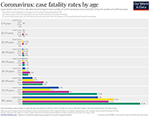
Figure 3. Case fatality charge per unit by age in selected countries every bit of April 2020 (33).
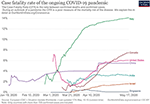
Figure 4. Case fatality rate in selected countries (33).
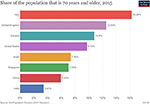
Figure v. Population share above lxx years of age (33).
Treatment
For COVID-xix, at that place is no specific treatment available. The WHO announced the organisation of a trial dubbed the "Solidarity" clinical trial for COVID-19 treatments (64). This is an international collaborative study that investigates the use of a few prime candidate drugs for apply confronting COVID-19, which are discussed below. The study is designed to reduce the time taken for an RCT by over 80%. In that location are over 1087 studies (Supplementary Information ane) for COVID-19 registered at clinicaltrials.gov, of which 657 are interventional studies (Supplementary Information ii) (65). The primary focus of the interventional studies for COVID-19 has been on antimalarial drugs and antiviral agents (Table 1), while over 200 studies deal with the employ of dissimilar forms of oxygen therapy. Most trials focus on improvement of clinical status, reduction of viral load, time to comeback, and reduction of mortality rates. These studies cover both astringent and mild cases.
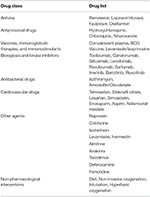
Tabular array one. Listing of therapeutic drugs under study for COVID-19 as per clinical trials registered nether clinicaltrials.gov.
Use of Antimalarial Drugs Confronting SARS-CoV-2
The utilize of chloroquine for the treatment of corona virus-based infection has shown some benefit in the prevention of viral replication in the cases of SARS and MERS. Nonetheless, it was not validated on a big scale in the form of a randomized control trial (50, 66–68). The drugs of selection amid antimalarials are Chloroquine (CQ) and Hydroxychloroquine (HCQ). The apply of CQ for COVID-nineteen was brought to calorie-free by the Chinese, especially by the publication of a alphabetic character to the editor of Bioscience Trends by Gao et al. (69). The alphabetic character claimed that several studies found CQ to be effective against COVID-nineteen; all the same, the letter of the alphabet did not provide many details. Immediately, over a brusque span of time, involvement in these ii agents grew globally. Early in vitro data accept revealed that chloroquine can inhibit the viral replication (70, 71).
HCQ and CQ work by raising the pH of the lysosome, the cellular organelle that is responsible for phagocytic degradation. Its part is to combine with cell contents that have been phagocytosed and break them down eventually, in some immune cells, as a downstream procedure to display some of the broken proteins as antigens, thus further enhancing the immune recruitment confronting an antigen/pathogen. The drug was to be administered alone or with azithromycin. The use of azithromycin may be advocated by the fact that it has been seen previously to have some immunomodulatory role in airway-related disease. It appears to reduce the release of pro-inflammatory cytokines in respiratory illnesses (72). However, HCQ and azithromycin are known to have a major drug interaction when co-administered, which increases the risk of QT interval prolongation (73). Quinine-based drugs are known to take adverse effects such every bit QT prolongation, retinal damage, hypoglycemia, and hemolysis of claret in patients with G-6-PD deficiency (66). Several preprints, including, a metanalysis now indicate that HCQ may take no do good for severe or critically sick patients who take COVID-19 where the event is need for ventilation or death (74, 75). Equally of Apr 21, 2020, after having pre-emptively recommended their use for SARS-CoV-2 infection, the US now advocates against the use of these two drugs based on the new data that has get available.
Use of Antiviral Drugs Confronting SARS-CoV-2
The antiviral agents are mainly those used in the example of HIV/AIDS, these being Lopinavir and Ritonavir. Other agents such as nucleoside analogs like Favipiravir, Ribavirin, Remdesivir, and Galidesivir take been tested for possible activeness in the prevention of viral RNA synthesis (76). Among these drugs, Lopinavir, Ritonavir, and Remdesivir are listed in the Solidarity trial past the WHO.
Remdesivir is a nucleotide analog for adenosine that gets incorporated into the viral RNA, hindering its replication and causing chain termination. This agent was originally developed for Ebola Virus Affliction (77). A written report was conducted with rhesus macaques infected with SARS-CoV-2 (78). In that study, subsequently 12 h of infection, the monkeys were treated with either Remdesivir or vehicle. The drug showed good distribution in the lungs, and the animals treated with the drug showed a better clinical score than the vehicle grouping. The radiological findings of the study also indicated that the animals treated with Remdesivir have less lung harm. There was a reduction in viral replication but not in virus shedding. Furthermore, there were no mutations found in the RNA polymerase sequences. A randomized clinical control study that became available in late Apr 2020 (79), having 158 on the Remdesivir arm and 79 on the placebo arm, plant that Remdesivir reduced the fourth dimension to recovery in the Remdesivir-treated arm to 11 days, while the placebo-arm recovery time was 15 days. Though this was not found to exist statistically significant, the amanuensis provided a basis for farther studies. The 28-days mortality was found to be similar for both groups. This has now provided united states with a footing on which to develop futurity molecules. The study has been supported past the National Institute of Health, USA. The authors of the study advocated for more than clinical trials with Remdesivir with a larger population. Such larger studies are already in progress, and their results are awaited. Remdesivir is currently i of the drugs that concur virtually promise confronting COVID-19.
An early trial in China with Lopinavir and Ritonavir showed no benefit compared with standard clinical care (80). More studies with this drug are currently underway, including one in India (81, 82).
Use of Convalescent Patient Plasma
Some other possible option would be the use of serum from convalescent individuals, as this is known to contain antibodies that can neutralize the virus and help in its elimination. This has been tried previously for other coronavirus infections (83). Early emerging example reports in this aspect look promising compared to other therapies that have been tried (84–87). A study from China indicates that five patients treated with plasma recovered and were eventually weaned off ventilators (84). They exhibited reductions in fever and viral load and improved oxygenation. The virus was not detected in the patients after 12 days of plasma transfusion. The U.s. FDA has provided detailed recommendations for investigational COVID-19 Ambulatory Plasma use (88). Ane of the benefits of this arroyo is that it can also be used for post-exposure prophylaxis. This arroyo is at present commencement to exist increasingly adopted in other countries, with over 95 trials registered on clinicaltrials.gov alone, of which at least 75 are interventional (89). The use of convalescent patient plasma, though mostly for research purposes, appears to be the best and, so far, the merely successful choice for treatment bachelor.
From a future perspective, the use of monoclonal antibodies for the inhibition of the attachment of the virus to the ACE-2 receptor may be the best bet. Bated from this, ACE-two-like molecules could likewise be utilized to attach and inactivate the viral proteins, since inhibition of the ACE-ii receptor would non be appropriate due to its negative repercussions physiologically. In the absence of drug regimens and a vaccine, the treatment is symptomatic and involves the apply of not-invasive ventilation or intubation where necessary for respiratory failure patients. Patients that may go into septic daze should be managed every bit per existing guidelines with hemodynamic support as well as antibiotics where necessary.
Prevention
The WHO has recommended that unproblematic personal hygiene practices can be sufficient for the prevention of spread and containment of the disease (90). Practices such as frequent washing of soiled easily or the use of sanitizer for unsoiled hands aid reduce transmission. Roofing of mouth while sneezing and coughing, and disinfection of surfaces that are frequently touched, such every bit tabletops, doorknobs, and switches with lxx% isopropyl alcohol or other disinfectants are broadly recommended. Information technology is recommended that all individuals affected by the disease, as well equally those caring for the infected, wear a mask to avoid transmission. Healthcare works are advised to wear a complete set of personal protective equipment every bit per WHO-provided guidelines. Fumigation of dormitories, quarantine rooms, and washing of apparel and other fomites with detergent and warm h2o can assistance get rid of the virus. Parcels and goods are non known to transmit the virus, equally per information provided by the WHO, since the virus is not able to survive sufficiently in an open, exposed environment. Quarantine of infected individuals and those who have come up into contact with an infected individual is necessary to farther forestall transmission of the virus (91). Quarantine is an historic period-old primitive practice that continues to hold relevance even today for disease containment. With the quarantine being implemented on such a large scale in some countries, taking the form of a national lockdown, the question arises of its bear on on the mental wellness of all individuals. This topic needs to be addressed, particularly in countries such as India and China, where information technology is nevertheless a affair of partial taboo to talk most information technology openly within the guild.
In India, the Ministry building of Ayurveda, Yoga, and Naturopathy, Unani, Siddha and Homeopathy (AYUSH), which deals with the alternative forms of medicine, issued a press release that the homeopathic, drug Arsenicum album xxx, can be taken on an empty tum for iii days to provide protection against the infection (92). It also provided a list of herbal drugs in the same printing release equally per Ayurvedic and Unani systems of medicine that can heave the immune arrangement to bargain with the virus. However, at that place is currently no evidence to support the utilize of these systems of medicine against COVID-19, and they demand to be tested.
The prevention of the disease with the apply of a vaccine would provide a more feasible solution. There are no vaccines bachelor for any of the coronaviruses, which includes SARS and MERS. The development of a vaccine, however, is in progress at a rapid pace, though it could take about a twelvemonth or two. Equally of April 2020, no vaccine has completed the development and testing procedure. A popular approach has been with the use of mRNA-based vaccine (93–96). mRNA vaccines take the advantage over conventional vaccines in terms of production, since they can be manufactured hands and practise not have to be cultured, as a virus would need to be. Alternative conventional approaches to making a vaccine confronting SARS-CoV-2 would include the apply of live attenuated virus as well as using the isolated spike proteins of the virus. Both of these approaches are in progress for vaccine development (97). Governments beyond the earth have poured in resource and made changes in their legislation to ensure rapid development, testing, and deployment of a vaccine.
Barriers to Treatment
Lack of Transparency and Poor Media Relations
The lack of government transparency and poor reporting by the media take hampered the measures that could accept been taken past healthcare systems globally to bargain with the COVID-19 threat. The CDC, too as the US administration, downplayed the threat and thus failed to stock upwards on essential supplies, ventilators, and test kits. An early warning organization, if implemented, would have acquired borders to be shut and early lockdowns. The WHO also delayed its response in sounding the warning regarding the severity of the outbreak to allow nations globally to gear up for a pandemic. Singapore is a prime case where, despite the WHO not raising concerns and banning travel to and from Red china, a country banned travelers and took early measures, thus managing the outbreak quite well. South Korea is another example of how things may accept played out had those measures by agencies been taken with transparency. Increased transparency would have allowed the healthcare sector to better ready and reduced the load of patients they had to deal with, helping flatten the curve. The increased patient load and confusion among citizens arising from not post-obit these practices has proved to be a barrier to providing effective treatments to patients with the illness elsewhere in the earth.
Lack of Preparedness and Protocols
Despite the previous SARS outbreak teaching united states important lessons and providing us with data on a potential outbreak, many nations did not take the important measures needed for a future outbreak. There was no allotment of sufficient funds for such an event. Many countries experienced severe lack of PPE, and the lockdown precautions hampered the logistics of supply and manufacturing of such essential equipment. Singapore and South korea had protocols in place and were able to implement them at a moment's notice. The spurt of cases that Korea experienced was managed well, providing evidence to this effect. The lack of preparedness and lack of protocol in other nations has resulted in confusion every bit to how the treatment may be administered safely to the big book of patients while dealing with diagnostics. Both of these factors accept limited the accessibility to healthcare services due to sheer volume.
Socio-Economic Touch
During the SARS epidemic, China faced an economic setback, and experts were unsure if whatsoever recovery would be made. Notwithstanding, the global and domestic state of affairs was then in China'southward favor, every bit it had a lower debt, allowing it to make a speedy recovery. This is non the instance now. Global experts have a pessimistic outlook on the outcome of this outbreak (98). The fear of COVID-19 affliction, lack of proper understanding of the dangers of the virus, and the misinformation spread on the social media (99) accept caused a breakup of the economic flow globally (100). An instance of this is Republic of indonesia, where a great corporeality of fear was expressed in responses to a survey when the nation was yet costless of COVID-xix (101). The pandemic has resulted in over 2.half dozen billion people being put under lockdown. This lockdown and the cancellation of the lunar year celebration has afflicted business at the local level. Hundreds of flights have been canceled, and tourism globally has been afflicted. Japan and Indonesia are estimated to lose over 2.44 billion dollars due to this (102, 103). Workers are not able to work in factories, transportation in all forms is restricted, and appurtenances are non produced or moved. The transport of finished products and raw materials out of China is depression. The Economist has published US stock market place details indicating that companies in the US that have Chinese roots fell, on boilerplate, 5 points on the stock market place as compared to the S&P 500 index (104). Companies such equally Starbucks have had to close over 4,000 outlets due to the outbreak as a precaution. Tech and pharma companies are at higher risk since they rely on China for the supply of raw materials and active pharmaceutical ingredients. Paracetamol, for i, has reported a price increase of over forty% in India (104–106). Mass hysteria in the market has caused selling of shares of these companies, causing a tumble in the Indian stock market. Though long-term investors volition not be significantly affected, brusk-term traders will discover themselves in soup. Politically, however, this has farther bolstered back up for world leaders in countries such as India, Germany, and the U.k., who are achieving good approving ratings, with citizens being satisfied with the government's approach. In contrast, the ratings of United states of america President Donald Trump have dropped due to the style in which the COVID-19 pandemic was handled. These pocket-sized impacts may be of temporary significance, and the worst and direct affect will exist on People's republic of china itself (107–109), as the looming trade war with the USA had a negative impact on the Chinese and Asian markets. The longer production of goods continues to remain suspended, the more than adversely it will affect the Chinese economy and the global markets dependent on it (110). If this disease is not independent, more and more lockdowns past multiple nations volition severely bear upon the economic system and lead to many social complications.
Conclusion
The appearance of the 2019 Novel Coronavirus has added and will continue to add together to our agreement of viruses. The pandemic has once again tested the world'south preparedness for dealing with such outbreaks. Information technology has provided an outlook on how a massive-scale biological result can cause a socio-economic disturbance through misinformation and social media. In the coming months and years, nosotros tin can expect to gain further insights into SARS-CoV-ii and COVID-19.
Author Contributions
KN: conceptualization. RK, AA, JM, and KN: investigation. RK and AA: writing—original draft training. KN, PN, and JM: writing—review and editing. KN: supervision.
Conflict of Interest
The authors declare that the enquiry was conducted in the absence of whatever commercial or financial relationships that could exist construed every bit a potential conflict of interest.
Acknowledgments
The authors would like to admit the contributions fabricated by Dr. Piya Paul Mudgal, Assistant Professor, Manipal Establish of Virology, Manipal University of Higher Instruction towards inputs provided by her during the drafting of the manuscript.
Supplementary Material
The Supplementary Material for this commodity can be found online at: https://world wide web.frontiersin.org/articles/10.3389/fpubh.2020.00216/full#supplementary-material
Supplementary Data 1, 2. Listing of all studies registered for COVID-nineteen on clinicaltrials.gov.
References
1. McIntosh K, Dees JH, Becker WB, Kapikian AZ, Chanock RM. Recovery in tracheal organ cultures of novel viruses from patients with respiratory disease. Proc Natl Acad Sci Us. (1967) 57:933–twoscore. doi: ten.1073/pnas.57.4.933
PubMed Abstract | CrossRef Full Text | Google Scholar
2. Esper F, Weibel C, Ferguson D, Landry ML, Kahn JS. Evidence of a novel human coronavirus that is associated with respiratory tract disease in infants and immature children. J Infect Dis. (2005) 191:492–8. doi: ten.1086/428138
PubMed Abstract | CrossRef Full Text | Google Scholar
4. Peiris JSM, Lai ST, Poon LLM, Guan Y, Yam LYC, Lim W, et al. Coronavirus as a possible crusade of severe acute respiratory syndrome. Lancet. (2003) 361:1319–25. doi: 10.1016/S0140-6736(03)13077-2
PubMed Abstract | CrossRef Total Text | Google Scholar
half-dozen. Zaki AM, van Boheemen Due south, Bestebroer TM, Osterhaus ADME, Fouchier RAM. Isolation of a novel coronavirus from a man with pneumonia in Saudi arabia. Northward Engl J Med. (2012) 367:1814–20. doi: 10.1056/NEJMoa1211721
PubMed Abstruse | CrossRef Full Text | Google Scholar
eight. Li W, Moore MJ, Vasllieva N, Sui J, Wong SK, Berne MA, et al. Angiotensin-converting enzyme 2 is a functional receptor for the SARS coronavirus. Nature. (2003) 426:450–4. doi: x.1038/nature02145
PubMed Abstract | CrossRef Total Text | Google Scholar
9. Ge X-Y, Li J-L, Yang Ten-Fifty, Chmura AA, Zhu Chiliad, Epstein JH, et al. Isolation and characterization of a bat SARS-like coronavirus that uses the ACE2 receptor. Nature. (2013) 503:535–8. doi: 10.1038/nature12711
PubMed Abstract | CrossRef Total Text | Google Scholar
xiii. Gorbalenya AE, Baker SC, Baric RS, Groot RJ, de Drosten C, Gulyaeva AA, et al. The species severe acute respiratory syndrome-related coronavirus: classifying 2019-nCoV and naming it SARS-CoV-two. Nat Microbiol. (2020) five:536–44. doi: 10.1038/s41564-020-0695-z
PubMed Abstruse | CrossRef Total Text | Google Scholar
14. Ji W, Wang W, Zhao 10, Zai J, Li X. Homologous recombination within the spike glycoprotein of the newly identified coronavirus may boost cross-species transmission from serpent to human. J Med Virol. (2020) 7:jmv.25682. doi: 10.1002/jmv.25682
PubMed Abstract | CrossRef Full Text | Google Scholar
sixteen. Lu R, Zhao X, Li J, Niu P, Yang B, Wu H, et al. Genomic characterisation and epidemiology of 2019 novel coronavirus: implications for virus origins and receptor binding. Lancet. (2020) 395:565–74. doi: 10.1016/S0140-6736(xx)30251-eight
PubMed Abstract | CrossRef Full Text | Google Scholar
17. Wassenaar TM, Zou Y. 2019_nCoV: Rapid classification of betacoronaviruses and identification of traditional Chinese medicine every bit potential origin of zoonotic coronaviruses. Lett Appl Microbiol. (2020) 70:324–48. doi: 10.1111/lam.13285
PubMed Abstract | CrossRef Full Text | Google Scholar
21. Zhou P, Yang 40, Wang XG, Hu B, Zhang Fifty, Zhang W, et al. A pneumonia outbreak associated with a new coronavirus of probable bat origin. Nature. (2020) 579:270–3. doi: 10.1038/s41586-020-2012-7
PubMed Abstruse | CrossRef Full Text | Google Scholar
22. Menachery VD, Yount BL, Debbink K, Agnihothram S, Gralinski LE, Plante JA, et al. A SARS-like cluster of circulating bat coronaviruses shows potential for human emergence. Nat Med. (2015) 21:1508–13. doi: 10.1038/nm.3985
PubMed Abstract | CrossRef Total Text | Google Scholar
26. Albariño CG, Guerrero LW, Jenks HM, Chakrabarti AK, Ksiazek TG, Rollin PE, et al. Insights into Reston virus spillovers and adaption from virus whole genome sequences. PLoS One. (2017) 12:e0178224. doi: 10.1371/journal.pone.0178224
PubMed Abstract | CrossRef Full Text | Google Scholar
27. Yao H, Lu Ten, Chen Q, Xu Chiliad, Chen Y, Cheng L, et al. Patient-derived mutations impact pathogenicity of SARS-CoV-2. medRxiv. (2020). doi: 10.2139/ssrn.3578153
CrossRef Full Text | Google Scholar
28. Stefanelli P, Faggioni G, Lo Presti A, Fiore S, Marchi A, Benedetti E, et al. Whole genome and phylogenetic assay of two SARS-CoV-2 strains isolated in Italy in January and February 2020: additional clues on multiple introductions and further circulation in Europe. Eurosurveillance. (2020) 25:2000305. doi: 10.2807/1560-7917.ES.2020.25.thirteen.2000305
PubMed Abstruse | CrossRef Full Text | Google Scholar
29. Yadav P, Potdar V, Choudhary Chiliad, Nyayanit D, Agrawal Chiliad, Jadhav S, et al. Full-genome sequences of the first 2 SARS-CoV-2 viruses from Bharat. Indian J Med Res. (2020) 151:200–9. doi: 10.4103/ijmr.IJMR_663_20
PubMed Abstract | CrossRef Full Text | Google Scholar
31. WHO | Middle East Respiratory Syndrome Coronavirus (MERS-CoV). Earth Health System (2020).
Google Scholar
32. WHO | Summary of Probable SARS Cases With Onset of Illness From 1 November 2002 to 31 July 2003. Earth Health Arrangement (2015).
Google Scholar
33. Worldometer. Coronavirus cases. Worldometer. (2020) 1−22.
Google Scholar
35. Sanche S, Lin YT, Xu C, Romero-Severson Due east, Hengartner N, Ke R. High contagiousness and rapid spread of severe astute respiratory syndrome coronavirus 2. Emerg Infect Dis. (2020) 26. doi: 10.3201/eid2607.200282
PubMed Abstract | CrossRef Full Text | Google Scholar
41. Rothe C, Schunk M, Sothmann P, Bretzel G, Froeschl One thousand, Wallrauch C, et al. Transmission of 2019-NCOV infection from an asymptomatic contact in Germany. N Engl J Med. (2020) 382:970–one. doi: 10.1056/NEJMc2001468
PubMed Abstract | CrossRef Full Text | Google Scholar
44. Holshue ML, DeBolt C, Lindquist Southward, Lofy KH, Wiesman J, Bruce H, et al. First Case of 2019 Novel Coronavirus in the United States. Northward Engl J Med. (2020) 382:929–36. doi: 10.1056/NEJMoa2001191
CrossRef Total Text | Google Scholar
45. Yeo C, Kaushal Southward, Yeo D. Enteric involvement of coronaviruses: is faecal–oral transmission of SARS-CoV-2 possible? Lancet Gastroenterol Hepatol. (2020) 5:335–37. doi: 10.1016/S2468-1253(20)30048-0
PubMed Abstract | CrossRef Total Text | Google Scholar
46. Chen H, Guo J, Wang C, Luo F, Yu X, Zhang Westward, et al. Clinical characteristics and intrauterine vertical transmission potential of COVID-19 infection in nine meaning women: a retrospective review of medical records. Lancet. (2020) 395:809–15. doi: ten.1016/S0140-6736(20)30360-three
PubMed Abstract | CrossRef Full Text | Google Scholar
47. Fehr AR, Perlman Southward. Coronaviruses: An overview of their replication and pathogenesis. In: Coronaviruses: Methods and Protocols (New York: Springer), 1–23. doi: ten.1007/978-ane-4939-2438-7_1
PubMed Abstract | CrossRef Full Text | Google Scholar
49. Hoffmann Thou, Kleine-Weber H, Schroeder South, Mü MA, Drosten C, Pö Due south. SARS-CoV-ii Jail cell Entry Depends on ACE2 and TMPRSS2 and is blocked by a clinically proven protease inhibitor. Cell. (2020) 181:271–80. doi: 10.1016/j.cell.2020.02.052
PubMed Abstract | CrossRef Full Text | Google Scholar
51. Huang C, Wang Y, Li X, Ren L, Zhao J, Hu Y, et al. Clinical features of patients infected with 2019 novel coronavirus in Wuhan, Cathay. Lancet. (2020) 395:497–506. doi: 10.1016/S0140-6736(xx)30183-5
PubMed Abstruse | CrossRef Total Text | Google Scholar
52. Udugama B, Kadhiresan P, Kozlowski HN, Malekjahani A, Osborne M, Li VYC, et al. Diagnosing COVID-19: the disease and tools for detection. ACS Nano. (2020) 14:3822–35. doi: 10.1021/acsnano.0c02624
PubMed Abstract | CrossRef Total Text | Google Scholar
56. Petersen R, Pan L, Blanck HM. Racial and ethnic disparities in adult obesity in the The states: CDC'due south tracking to inform state and local activity. Prev Chronic Dis. (2019) 16:180579. doi: 10.5888/pcd16.180579
PubMed Abstruse | CrossRef Full Text | Google Scholar
57. Wang L, Southerland J, Wang K, Bailey BA, Alamian A, Stevens MA, et al. Ethnic differences in take a chance factors for obesity amidst adults in California, the Us. (2017) 2017:2427483. doi: x.1155/2017/2427483
PubMed Abstract | CrossRef Full Text | Google Scholar
59. Wang J, Hajizadeh Northward, Moore EE, McIntyre RC, Moore PK, Veress LA, et al. Tissue plasminogen activator (tPA) treatment for COVID-nineteen associated acute respiratory distress syndrome (ARDS): a case series. J Thromb Haemost. (2020) 1–4. doi: 10.1111/jth.14828
PubMed Abstruse | CrossRef Full Text | Google Scholar
60. Lancet T, Medicine R. Comment Understanding pathways to decease in patients with. Lancet Respir Med. (2020) 2019:2019–21. doi: ten.1016/S2213-2600(xx)30165-Ten
CrossRef Full Text | Google Scholar
62. Zhou F, Yu T, Du R, Fan Yard, Liu Y, Liu Z, et al. Clinical grade and risk factors for bloodshed of developed inpatients with COVID-19 in Wuhan, China: a retrospective cohort report. Lancet. (2020) 395:1054–62. doi: 10.1016/S0140-6736(20)30566-iii
PubMed Abstract | CrossRef Full Text | Google Scholar
66. De Wilde AH, Jochmans D, Posthuma CC, Zevenhoven-Dobbe JC, Van Nieuwkoop S, Bestebroer TM, et al. Screening of an FDA-approved compound library identifies four small-molecule inhibitors of Middle East respiratory syndrome coronavirus replication in cell civilization. Antimicrob Agents Chemother. (2014) 58:4875–84. doi: 10.1128/AAC.03011-xiv
PubMed Abstruse | CrossRef Total Text | Google Scholar
67. Tai DYH. Pharmacologic treatment of SARS: current knowledge and recommendations. Ann Acad Med Singapore. (2007) 36:438–43.
PubMed Abstruse | Google Scholar
68. Sheahan TP, Sims AC, Leist SR, Schäfer A, Won J, Brown AJ, et al. Comparative therapeutic efficacy of remdesivir and combination lopinavir, ritonavir, and interferon beta against MERS-CoV. Nat Commun. (2020) 11:222. doi: 10.1038/s41467-019-13940-6
PubMed Abstract | CrossRef Total Text | Google Scholar
69. Gao J, Tian Z, Yang Ten. Quantum: Chloroquine phosphate has shown apparent efficacy in treatment of COVID-19 associated pneumonia in clinical studies. Biosci Trends. (2020) 14:72–73. doi: 10.5582/bst.2020.01047
PubMed Abstract | CrossRef Full Text | Google Scholar
70. Wang M, Cao R, Zhang L, Yang Ten, Liu J, Xu Thousand, et al. Remdesivir and chloroquine finer inhibit the recently emerged novel coronavirus (2019-nCoV) in vitro. Cell Res. (2020) 30:269–71. doi: x.1038/s41422-020-0282-0
PubMed Abstract | CrossRef Full Text | Google Scholar
71. Vincent MJ, Bergeron Due east, Benjannet Southward, Erickson BR, Rollin PE, Ksiazek TG, et al. Chloroquine is a potent inhibitor of SARS coronavirus infection and spread. Virol J. (2005) 2:1–0. doi: 10.1186/1743-422X-2-69
PubMed Abstruse | CrossRef Full Text | Google Scholar
72. Cramer CL, Patterson A, Alchakaki A, Soubani AO. Immunomodulatory indications of azithromycin in respiratory disease: a curtailed review for the clinician. Postgrad Med. (2017) 129:493–9. doi: 10.1080/00325481.2017.1285677
PubMed Abstract | CrossRef Full Text | Google Scholar
74. Magagnoli J, Narendran S, Pereira F, Cummings T, Hardin JW, Sutton SS, et al. Outcomes of hydroxychloroquine usage in U.s. veterans hospitalized with Covid-19. medRxiv. (2020) doi: 10.1101/2020.04.xvi.20065920
CrossRef Full Text | Google Scholar
75. Shamshirian A, Hessami A, Heydari One thousand, Alizadeh-Navaei R, Ebrahimzadeh MA, Ghasemian R, et al. Hydroxychloroquine Versus COVID-19: A Rapid Systematic Review and Meta-Analysis. medRxiv. (2020) doi: 10.1101/2020.04.14.20065276
CrossRef Total Text | Google Scholar
77. Warren TK, Jordan R, Lo MK, Ray AS, Mackman RL, Soloveva V, et al. Therapeutic efficacy of the modest molecule GS-5734 against Ebola virus in rhesus monkeys. Nature. (2016) 531:381–5. doi: 10.1038/nature17180
PubMed Abstract | CrossRef Full Text | Google Scholar
78. Williamson BN, Feldmann F, Schwarz B, Meade-White K, Porter DP, Schulz J, et al. Clinical benefit of remdesivir in rhesus macaques infected with SARS-CoV-2. bioRxiv. (2020) doi: 10.1101/2020.04.xv.043166
CrossRef Full Text | Google Scholar
79. Wang Y, Zhang D, Du G, Du R, Zhao J, Jin Y, et al. Remdesivir in adults with severe COVID-19: a randomised, double-blind, placebo-controlled, multicentre trial. Lancet. (2020) 395:1569–78. doi: 10.1016/S0140-6736(twenty)31022-nine
PubMed Abstruse | CrossRef Total Text | Google Scholar
80. Cao B, Wang Y, Wen D, Liu W, Wang J, Fan G, et al. A trial of lopinavir–ritonavir in adults hospitalized with severe covid-19. N Engl J Med. (2020) 382:1787–99. doi: x.1056/NEJMoa2001282
PubMed Abstruse | CrossRef Total Text | Google Scholar
82. Bhatnagar T, Murhekar One thousand, Soneja Thou, Gupta N, Giri South, Wig N, et al. Lopinavir/ritonavir combination therapy amongst symptomatic coronavirus disease 2019 patients in India: protocol for restricted public health emergency use. Indian J Med Res. (2020) 151:184–9. doi: ten.4103/ijmr.IJMR_502_20
PubMed Abstract | CrossRef Total Text | Google Scholar
83. Yeh Thousand-Thou, Chiueh T-S, Siu LK, Lin J-C, Chan PKS, Peng One thousand-Y, et al. Experience of using convalescent plasma for severe acute respiratory syndrome among healthcare workers in a Taiwan hospital. J Antimicrob Chemother. (2005) 56:919–22. doi: 10.1093/jac/dki346
PubMed Abstruse | CrossRef Total Text | Google Scholar
84. Shen C, Wang Z, Zhao F, Yang Y, Li J, Yuan J, et al. Handling of 5 critically Ill patients with COVID-19 with convalescent plasma. JAMA. (2020) 323:1582–9. doi: 10.1001/jama.2020.4783
PubMed Abstract | CrossRef Full Text | Google Scholar
85. Cao Westward, Liu X, Bai T, Fan H, Hong Chiliad, Song H, et al. Loftier-dose intravenous immunoglobulin as a therapeutic selection for deteriorating patients with coronavirus disease 2019. Open Forum Infect Dis. (2020) 7:1–vi. doi: 10.1093/ofid/ofaa102
PubMed Abstract | CrossRef Full Text | Google Scholar
86. Bloch EM, Shoham South, Casadevall A, Sachais BS, Shaz B, Winters JL, et al. Deployment of ambulatory plasma for the prevention and treatment of COVID-nineteen. J Clin Invest. (2020) 138745:1–22. doi: 10.1172/JCI138745
PubMed Abstruse | CrossRef Full Text | Google Scholar
91. Wilder-Smith A, Freedman Practise. Isolation, quarantine, social distancing and community containment: pivotal function for old-style public health measures in the novel coronavirus (2019-nCoV) outbreak. J Travel Med. (2020) 27:taaa020. doi: 10.1093/jtm/taaa020
PubMed Abstract | CrossRef Full Text | Google Scholar
97. Xie L, Sunday C, Luo C, Zhang Y, Zhang J, Yang J, et al. SARS-CoV-2 and SARS-CoV Spike-RBD construction and receptor binding comparing and potential implications on neutralizing antibiotic and vaccine development. bioRxiv [Preprint]. (2020). doi: 10.1101/2020.02.16.951723
CrossRef Full Text | Google Scholar
Source: https://www.frontiersin.org/articles/10.3389/fpubh.2020.00216/full
0 Response to "nate Are You Picking Your Nose and Eating Your Boogers Again Stop Its Making You Stupid"
Post a Comment